Petoi Bittle Nybble · Volume 8
Building One, Buying One, and an Honest Assessment
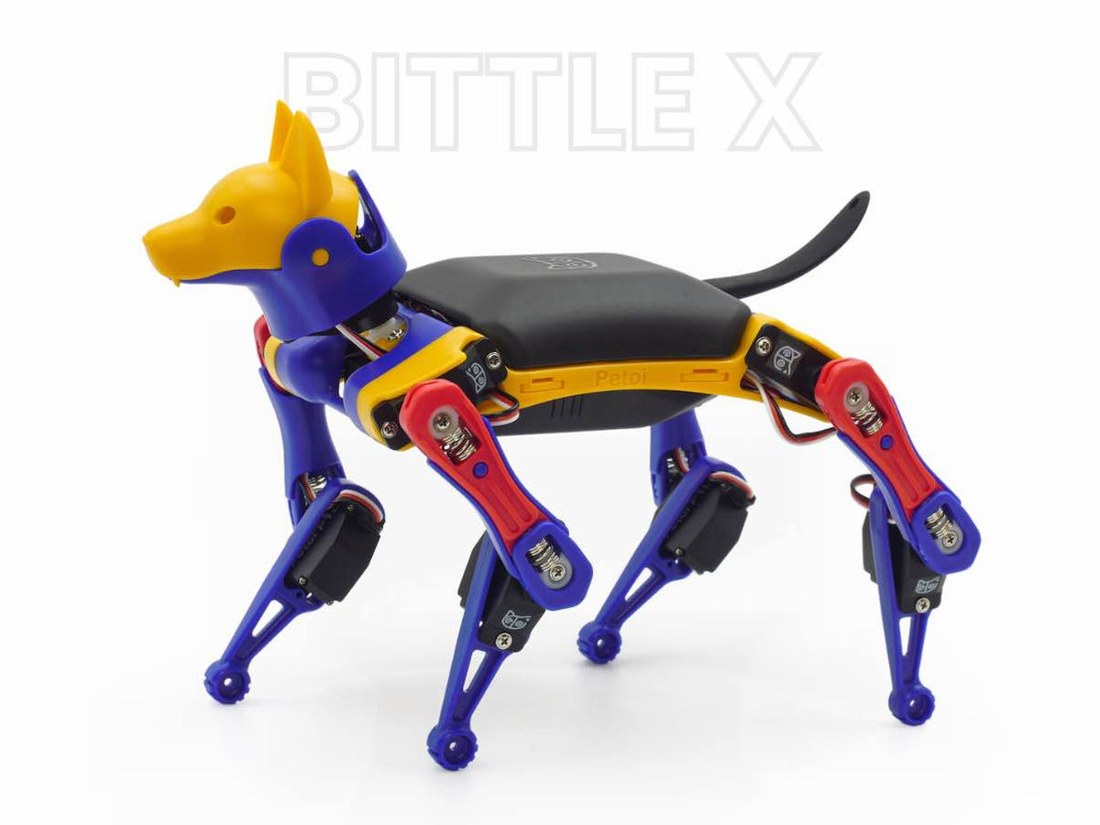
8.1 Kit or pre-assembled
Most Petoi machines are offered both ways, and the choice is not purely about convenience — assembling one is how an owner learns what the machine is.
Table 1 — Kit or pre-assembled
| Machine | Kit | Pre-assembled | Build time |
|---|---|---|---|
| Bittle / Bittle X V2 | yes | yes | 40 to 90 minutes |
| Nybble (legacy, wood) | yes | yes | about 3 hours |
| Nybble Q | not currently | yes | — |
Nybble Q is currently pre-assembled only. Petoi describes its build as complex and states that a kit version is still in development. A buyer who specifically wants the assembly experience — which for many people is the entire point — should verify availability before ordering, because the dog and the cat differ on this at the time of writing.
The legacy Nybble’s roughly three-hour build is a laser-cut plywood, screw-free three-dimensional puzzle. It is by some margin the most satisfying object in the range and the least robust; plywood does not tolerate repeated disassembly or a fall onto a hard floor the way moulded plastic does.
8.2 Choosing servos
Every kit is offered with a choice that matters more than it appears:
Table 2 — Every kit is offered with a choice that matters more than it appears
| P1L “Lite” | P1S Alloy | |
|---|---|---|
| Gears | plastic | alloy |
| Sold as | STEM Kit | Robotics Kit |
| Cost | lower | higher |
| Failure mode | gears strip | motor or bearing wears |
In any servo-driven machine the gear train is the sacrificial element, and on a legged robot the legs take impacts continuously. Plastic gears are the cheaper consumable and the more likely to fail in a classroom or under a robot that falls a lot; alloy gears last longer and transmit shock further into the servo instead.
Neither choice is wrong, and Petoi shipping spare servos in the pack for both options — ten with a nine-joint dog, twelve with an eleven-joint cat — is a realistic acknowledgement that these are wear items.
8.3 Current prices
Table 3 — Current prices
| Machine | Price | Status |
|---|---|---|
| Bittle X V2 | USD 319 | current |
| Nybble Q | USD 435 | current |
| Bittle (legacy) | USD 289 or 309 — see below | final stock |
| Nybble (legacy) | USD 299 | sold out |
Petoi’s own pages disagree on the legacy Bittle: the store collection lists USD 289 and the product page lists USD 309. Both were observed during this research; the discrepancy is recorded rather than resolved.
A caveat on all of these. Independent coverage flagged that prices for these robots are exposed to United States and China trade and tariff conditions. Prices in this dive are a snapshot and should be re-checked before purchase rather than relied upon.
8.4 Buying a used legacy machine
Both legacy models are discontinued, so second-hand units will circulate.
The case for it is stronger than usual, and it rests on one fact: the
PetoiCamp/OpenCat repository, which carries the NyBoard firmware, was still receiving
commits in September 2026. A used Bittle or Nybble is a discontinued product running
maintained software. That is the inverse of the situation in this hub’s Anki dives,
where the software is frozen and the vendor is gone.
What is given up, relative to the current generation: no on-board Wi-Fi or Bluetooth without dongles; no offline voice; no position-feedback servos, and therefore no teaching by demonstration; and no documented Raspberry Pi interface. For learning gaits and kinematics, none of that is required.
What to check: every servo drives and holds position; the frame is uncracked, and on a wooden Nybble the plywood is sound at the joints; the battery holds charge; the charger is included, since the legacy Nybble did not ship with one; and the servo horns are not stripped.
8.5 Honest assessment
8.5.1 What these machines are genuinely good at
Learning legged robotics. This is the strongest claim and it is well supported. The firmware is published, the gait tables are readable, the command protocol is documented, and the loop from “change a number” to “watch the robot walk differently” is short. Very little else at this price offers that.
Surviving their vendor. Under an MIT licence, with the firmware already on the owner’s disk and a compiler as the only dependency, these robots are about as resistant to corporate failure as a consumer product can be. That is the central contrast with the Anki machines documented alongside them.
Being affordable enough to risk. A three-hundred-dollar robot can be dropped, experimented on, disassembled and lent to a student. That changes how it gets used.
8.5.2 What is oversold
“Fully open.” Nearly true. The mobile app is proprietary. It matters little, for the reasons in Vol 6, but the phrase should carry the asterisk.
Durability claims. The most substantial independent review located for this dive stated plainly that it had received no review unit and had measured no battery runtime, servo durability, gait stability, classroom setup time or software reliability. The volume of enthusiastic coverage of these robots is not matched by measurement. Petoi’s own stability claims are recorded in Vol 5 as unverified.
Research-platform positioning. Real, but bounded by physics as Vol 7 sets out, and the specific published studies named in this subproject’s scaffolding were not retrieved or verified here.
Unpublished specifications. No servo torque or speed ratings were located on the specification pages consulted, which means payload and dynamic capability cannot be derived. The stated one-pound payload is unverified.
8.5.3 Who should not buy one
Anyone wanting a companion robot. These are not Vector or Cozmo; they have no personality engine, no emotional model and no face. They are quadruped platforms that perform tricks well. A buyer wanting a robot that seems to like them is in the wrong dive.
Anyone wanting outdoor or payload capability. See Vol 7’s ceiling.
Anyone unwilling to read documentation. The block-coding route is genuine, but the value here is concentrated below it, and a buyer who never opens the firmware is paying for openness they will not use.
8.5.4 The verdict
For someone who wants to understand how a legged robot actually works, and to still own a functioning machine in a decade regardless of what happens to Petoi, Bittle X V2 is the strongest recommendation in this entire hub. The openness is real, load-bearing and actively maintained.
Nybble Q is the more charming object and the less athletic one, costs a hundred dollars more, and is currently unavailable as a kit. Choose it for the cat, not for the capability.
8.6 Figure slots for the unit documented here
Sources
- petoi.com product pages for Bittle, Bittle X V2, Nybble and Nybble Q — kit and pre-assembled options, the 40-to-90-minute and roughly three-hour build times, the Nybble Q pre-assembled-only note and its kit-in-development status, the P1S and P1L servo options and their STEM and Robotics kit designations, and all prices.
- petoi.com store collection — the second, conflicting legacy Bittle price.
- petoi.com technical specification pages — servo pack quantities, battery and charger details including the charger not being included with the legacy Nybble.
github.com/PetoiCamp/OpenCatrepository metadata — September 2026 commit activity on the legacy firmware, underpinning the used-purchase recommendation.- learnwitharobot.com, “Petoi’s new products” — the tariff caveat on pricing.
- tvgreport.com, “Review Preview: Petoi Bittle X” — the explicit statement of what was not measured, underpinning the durability caveat.
Comments (0)